
Sources of cash for an estate tax bill
An estate can pay estate tax from cash, life insurance proceeds, asset sales, borrowing or installment payment.
What the chart shows
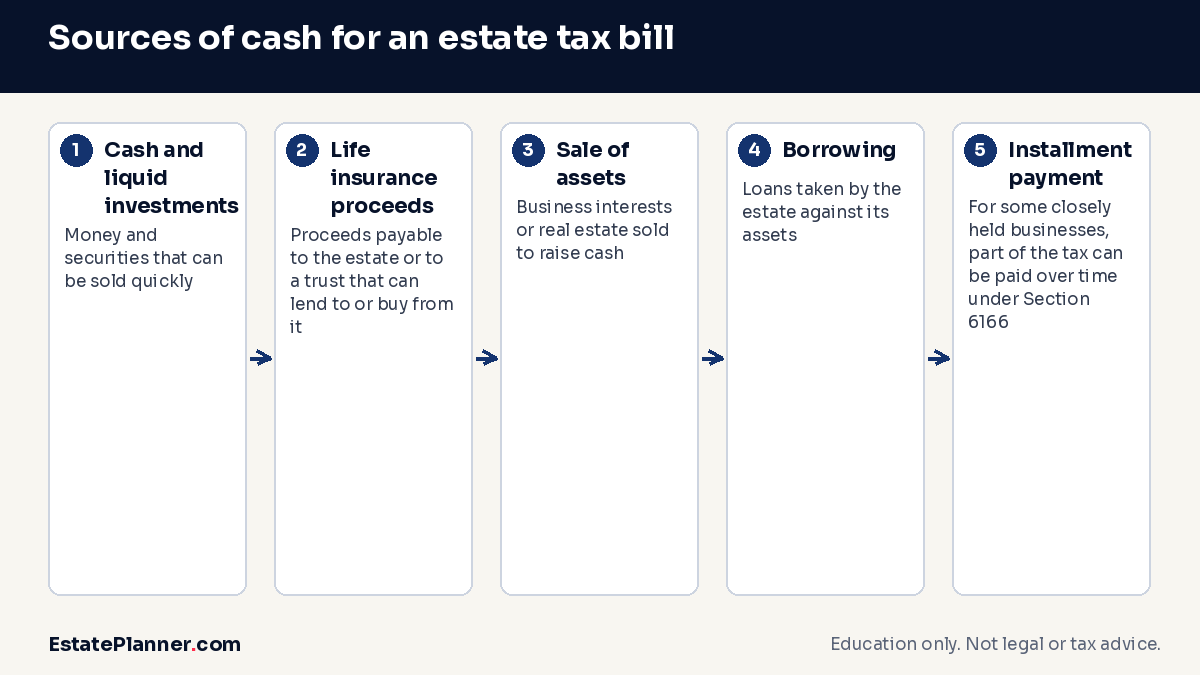
The chart groups five sources of cash that can contribute to an estate tax bill. Some provide money through existing cash or proceeds, while others involve selling assets, borrowing against assets, or paying part of the tax over time under a stated provision. Each source connects cash to the estate through a different route.
Together, the rows describe ways business interests, real estate, securities, insurance proceeds, and other assets can relate to payment of the bill. The chart includes both cash that can be made available and arrangements involving an estate or a trust.
How to read the chart
The first row is cash and liquid investments, described as money and securities that can be sold quickly. The next row is life insurance proceeds, which can be payable to the estate or to a trust that can lend to the estate or buy from it.
The third row is sale of assets, where business interests or real estate are sold to raise cash. Borrowing is the fourth row and describes loans the estate takes against its assets.
The final row is installment payment. For some closely held businesses, this means part of the tax can be paid over time under Section 6166. Read each source alongside its explanation to see how it provides cash or a payment arrangement.
Where owners see this in practice
Owners of businesses can see two relevant rows in the chart. Business interests may be sold to raise cash, and for some closely held businesses part of the tax can be paid over time under Section 6166.
Owners of real estate can connect their property to the sale of assets row, which describes selling real estate to raise cash. The borrowing row describes a different connection, with the estate taking loans against its assets.
Private investments can fit the cash and liquid investments description when they are securities that can be sold quickly. Life insurance proceeds offer another path when payable to the estate or to a trust that can lend to or buy from it.
The data behind the chart
An estate can draw cash from five sources to pay an estate tax bill.
| Source | How it provides cash |
|---|---|
| Cash and liquid investments | Money and securities that can be sold quickly |
| Life insurance proceeds | Proceeds payable to the estate or to a trust that can lend to or buy from it |
| Sale of assets | Business interests or real estate sold to raise cash |
| Borrowing | Loans taken by the estate against its assets |
| Installment payment | For some closely held businesses, part of the tax can be paid over time under Section 6166 |
Common questions
What does the chart include as sources of cash?
The explanations describe money or proceeds, asset sales, loans against estate assets, and paying part of the tax over time in a specified business context.
How does installment payment relate to closely held businesses?
The chart presents this as an installment payment source.