
How estate liquidity works when wealth is tied up in assets
Key takeaway
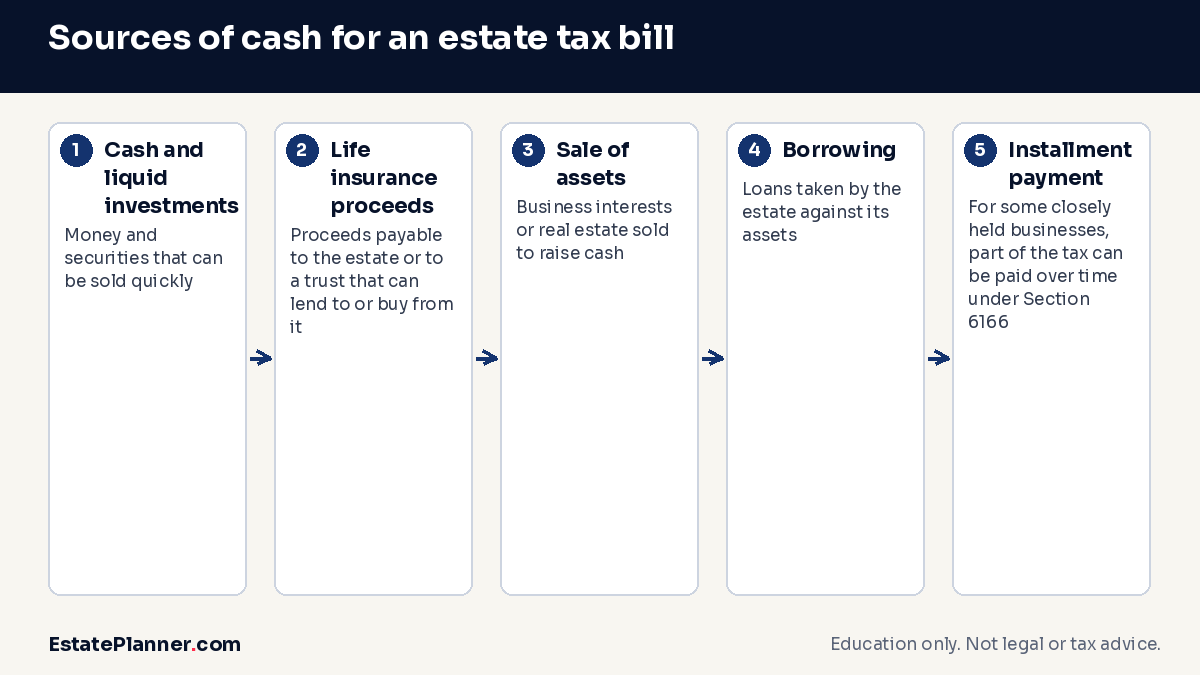
In Minnesota, for example, an estate holding illiquid assets can obtain cash through authorized borrowing or a trustee's permitted property purchase or loan, subject to governing terms and fiduciary duties, and other states differ.
Start a liquidity discussion by separating the assets you own from the cash you expect to need. Bring the will, trust documents and LLC operating agreements so your advisers can review authority alongside the proposed source of cash.
Borrowing for the estate
In Minnesota, for example, a personal representative acting reasonably for interested persons' benefit may borrow with or without security, subject to restrictions in the will, orders in formal proceedings and statutory priorities, and other states differ.
That authority does not establish lender availability or loan terms. Ask your advisers to distinguish permission to borrow from an actual financing proposal.
Trust purchases and loans
In Minnesota, for example, default trustee powers permit property purchases for cash or credit and loans from trust property, subject to trust terms and fiduciary duties, and other states differ.
Beneficiary loans must have terms the trustee considers fair and reasonable under the circumstances, with a lien on future distributions for repayment. These powers do not require a trustee to finance an estate.
Upon accepting trusteeship, the trustee must administer in good faith under the trust's terms and purposes, beneficiaries' interests and applicable law. Prudent administration requires reasonable care, skill and caution, considering trust purposes, terms, distribution requirements and relevant circumstances.
Applicable investment duties assess investments within the whole portfolio and a strategy suited to the trust's risk and return objectives. The trust instrument may alter or eliminate the default prudent investor rule.
Reasonable reliance on the instrument protects the trustee to that extent. Compliance depends on circumstances at the time of the decision, rather than hindsight or investment results.
Overlapping roles and personal conflicts
In Minnesota, for example, a fair transaction with an estate is not precluded merely because the trustee is its fiduciary or a beneficiary has an interest in it, and other states differ.
A transaction affected by a conflict between the trustee's fiduciary and personal interests is voidable by an affected beneficiary, subject to statutory protections for third parties and these exceptions:
- The trust terms authorized the transaction.
- A court approved the transaction.
- The beneficiary did not bring a judicial proceeding within the statutory time allowed.
- The beneficiary consented, ratified the transaction or released the trustee in compliance with the applicable statute.
- The transaction involves a contract entered into or claim acquired before the person became trustee.
A court may appoint a special fiduciary to decide on a proposed transaction that might violate the loyalty requirements.
LLC interests and access to distributions
In Minnesota, for example, an LLC interest transfer carries the transferred distribution rights but generally no management rights, subject to the deceased member representative exception below, and other states differ.
A transfer violating an operating agreement restriction is ineffective as to a person who had notice of the restriction when the transfer occurred. The LLC need not recognize transferee rights until it receives notice of the transfer.
If a member dies, the deceased member's personal representative or other legal representative may exercise the rights of a transferee provided in section 322C.0502, subdivision 3.
The representative may also exercise the rights of a current member under section 322C.0410 for purposes of settling the estate. These are specified accounting and estate settlement information rights, rather than a general grant of management authority.
These rules do not establish a universal payout delay for private fund interests. Bring the relevant agreements to the liquidity discussion rather than assuming an ownership transfer produces cash.
Two related terms
Estate liquidity: Cash available to meet estate cash needs. The term does not mean every liability is immediately due or that installment relief creates cash.
Duty of loyalty: In Minnesota, for example, a trustee owes loyalty to beneficiaries and must not put personal interests above theirs, and other states differ.
An investor perspective on upcoming expenses
"And what we tell folks is this is a very good place to keep your liquidity, your emergency funds, if you have a known upcoming expense, but it becomes inefficient for certain types of long term investments."
Common questions
When is federal estate tax generally payable?
Generally nine months after death when an estate tax return is required, without regard to an extension for filing that return. Separate payment relief may apply.
What administration expenses belong in the cash discussion?
Court costs, accounting fees and appraisal fees are examples of estate administration expenses. Administration involves collecting assets, paying debts and distributing property to those entitled to it.
These expense categories alone do not establish deductibility or a settlement cost percentage.
Sources
- Minnesota Statutes §524.3-715, personal representative borrowing authority and its conditions.
- Minnesota Statutes §501C.0816, trustee property and lending powers.
- Minnesota Statutes §501C.0105, effect of trust terms.
- Minnesota Statutes §501C.0801, administration in good faith.
- Minnesota Statutes §501C.0802, loyalty, conflicts, fair estate transactions and special fiduciaries.
- Minnesota Statutes §501C.1005, limitation periods for proceedings against trustees.
- Minnesota Statutes §501C.1009, beneficiary consent, release and ratification.
- Minnesota Statutes §501C.1012, protection of persons dealing with trustees.
- Minnesota Statutes §501C.0804, prudent administration.
- Minnesota Statutes §501C.0901, prudent investor duties and assessment of compliance.
- Minnesota Statutes §322C.0502, LLC transferable interests and transferee rights.
- Minnesota Statutes §322C.0504, deceased member representative rights.
- Minnesota Statutes §322C.0410, member information rights referenced by §322C.0504.
- Internal Revenue Code §6075 and §6151, return and payment timing.
- Treasury Regulation §20.2053-3, administration activities and expense categories.
- Investor Advantage talk transcript, 01M5FC4NXM6S5X9217C0R0SC14.txt, perspective on liquidity and known upcoming expenses.