
The estate settlement sequence
Settling an estate moves through seven stages, from locating documents to distribution and closing.
What the chart shows
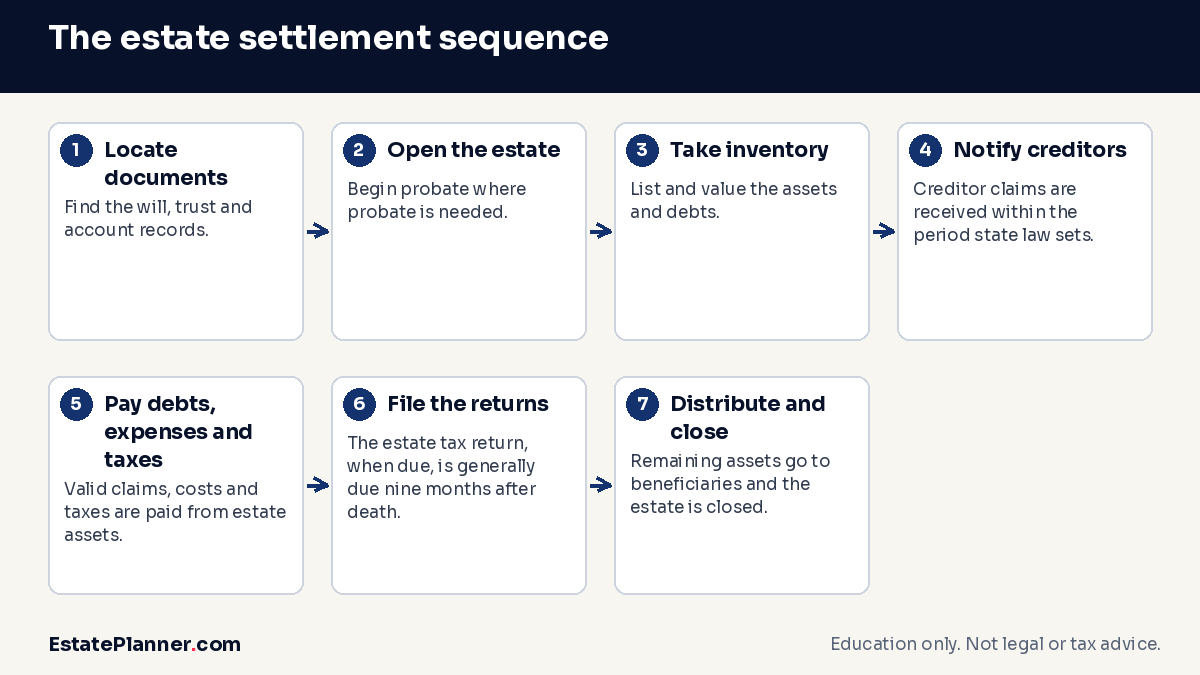
The chart shows a sequence for settling an estate, from locating records through distributing what remains and closing the estate. Each stage names a part of the process and describes what happens at that point. The sequence includes inventory, creditor claims, payment of valid claims and costs, and filing a return when due.
How to read the chart
The first stage is locating the will, trust and account records. The second stage begins probate where probate is needed, followed by an inventory that lists and values assets and debts. Next, creditor claims are received within the period state law sets, and valid claims, costs and taxes are paid from estate assets. The final stages cover filing the estate tax return when due, generally nine months after death, then distributing remaining assets to beneficiaries and closing the estate.
Where owners see this in practice
For a business owner, the sequence includes locating account records and listing and valuing assets and debts as part of the estate inventory. Real estate fits within the same inventory stage, where assets and debts are listed and valued. Private investments can also be part of the assets being inventoried. Across these ownership contexts, the chart then shows creditor claims, payment of valid claims, costs and taxes from estate assets, and distribution of what remains to beneficiaries before the estate closes.
The data behind the chart
Settling an estate moves through seven stages, from locating documents to closing the estate.
| Stage | What happens |
|---|---|
| 1. Locate documents | Find the will, trust and account records. |
| 2. Open the estate | Begin probate where probate is needed. |
| 3. Take inventory | List and value the assets and debts. |
| 4. Notify creditors | Creditor claims are received within the period state law sets. |
| 5. Pay debts, expenses and taxes | Valid claims, costs and taxes are paid from estate assets. |
| 6. File the returns | The estate tax return, when due, is generally due nine months after death. |
| 7. Distribute and close | Remaining assets go to beneficiaries and the estate is closed. |
Common questions
When does probate begin in the sequence?
The sequence starts with locating the will, trust and account records.
When is the estate tax return generally due?
The estate tax return, when one is required, is generally due nine months after death. The chart places filing the returns after paying debts, expenses and taxes.